

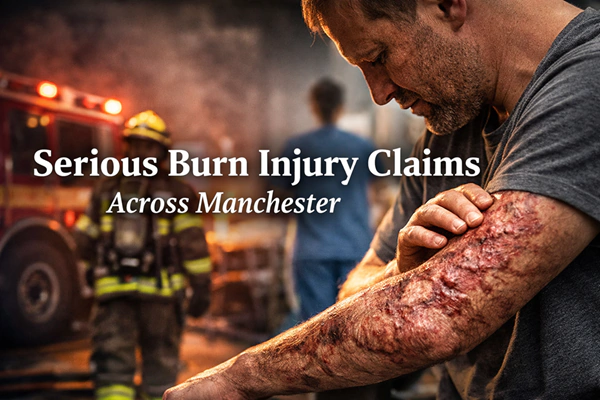
A serious burn injury is not confined to the moment it happens. The effects are often visible, long-lasting, and difficult to hide. Many people experience a prolonged recovery process that involves repeated treatment, scarring, and a level of emotional strain rarely appreciated at the outset.
Most commonly, unsafe workplaces, poorly maintained buildings, defective products, or avoidable accidents in public and private spaces in Manchester cause burn injuries. While some burns heal with time, more severe injuries can alter appearance, physical comfort, and confidence permanently.
How serious burn injuries occur in Manchester
Burn injuries can occur in a variety of settings, but environmental and safety failures often link to these patterns rather than mere misfortune.
In industrial and commercial workplaces, burns may result from contact with hot surfaces, chemicals, steam, or electrical equipment. Inadequate training, missing protective equipment, or poorly maintained machinery can all increase the risk. In busy logistics and manufacturing areas across Greater Manchester, these hazards are often well known, which places a higher responsibility on those managing the environment.
Residential and commercial buildings also present risks. Faulty wiring, unsafe heating systems, or inadequate fire safety measures can lead to serious burns. In some cases, people are injured not by the initial incident but while attempting to escape dangerous conditions, such as smoke or fire spreading through poorly protected spaces.
Defective products are another cause. Appliances, tools, or consumer goods that overheat or malfunction can cause significant injury, particularly where warnings or safety mechanisms are absent or ineffective.
The medical reality of burn injuries
At first, it may not be clear how bad a burn is. Some injuries continue to worsen after the initial incident, particularly where deeper tissue damage is involved.
Serious burns often require specialist treatment, including skin grafts, repeated dressings, and long periods of monitoring to prevent infection. Healing can be unpredictable. Complications may arise weeks or months later, extending recovery far beyond initial expectations.
Moreover, burn injuries increase the risk of infection, especially when they damage large areas of skin. When we compromise the skin’s natural barrier, even minor infections can escalate quickly. The result can lead to additional hospital admissions, delayed healing, and further surgical intervention.
In more severe cases, burn survivors may experience contractures, where the skin tightens as it heals, limiting movement around joints. This can affect the hands, arms, neck, or legs, sometimes requiring corrective surgery or prolonged physiotherapy. Sensitivity to heat, cold, or friction is also common and may persist long after visible wounds have healed.
Pain management is frequently an ongoing issue. Even after wounds have healed, burn survivors may experience discomfort or restricted movement that interferes with daily activities.
Scarring, appearance, and visibility
One of the defining features of serious burn injuries is visibility. Scarring is often permanent and may affect the face, hands, arms, or other areas that are difficult to conceal.
Changes in appearance can have a profound impact on confidence and self-perception. Many people find social situations more challenging after a burn injury, particularly where scarring attracts attention or unwanted questions.
Visible scarring can also affect how others respond. People may stare, ask intrusive questions, or make assumptions about ability or vulnerability. Over time, this can influence how individuals engage with the world, particularly in public-facing roles or customer-focused work.
For some, clothing choices, grooming routines, and social habits change as a result. These adjustments are rarely discussed in medical terms, yet they form a significant part of the lived experience after a serious burn injury.
This aspect of recovery is often underestimated.
Psychological recovery and emotional impact
Burn injuries are closely associated with psychological distress. People often experience anxiety, low mood, and reduced self-confidence, especially when their injuries are visible or their recovery takes a long time.
Some individuals experience difficulty returning to work or social activities, not because they are physically unable, but because of fear, self-consciousness, or trauma linked to the incident itself. These effects are not always immediate and may develop gradually as the reality of long-term scarring becomes clear.
Emotional recovery is rarely linear; support needs may change over time, particularly as individuals attempt to resume normal routines.
Work, public interaction, and long-term adjustment
Serious burn injuries can affect work in ways that go beyond physical capacity. Individuals in public-facing roles may find it harder to return to environments where visibility and interaction are central to the job. These situations can be particularly challenging where confidence has been affected by scarring or prolonged recovery.
Some workplaces lack the necessary equipment to accommodate ongoing treatment needs, frequent medical appointments, or sensitivity to heat and physical strain. Where adjustments are not made, individuals may feel pushed toward reduced hours or alternative roles, even if they remain capable of working.
The recognition and support of these challenges often shape long-term adjustment. Where support is limited, the impact of a burn injury can extend well beyond the initial recovery period.
Establishing liability in serious burn cases
Not every burn injury gives rise to a compensation claim. To be legally actionable, it must usually be shown that the injury resulted from a failure to take reasonable care.
In workplace cases, this often involves inadequate risk assessments, missing safety procedures, or failures in training and supervision. Where risks are known and preventable, responsibility is more likely to arise.
In many burn injury cases, liability turns on whether basic precautions were overlooked rather than whether the risk was unusual. Failure to maintain equipment, address known hazards, or act on previous safety concerns can all be relevant. Documentation, maintenance records, and training logs often play a central role in determining responsibility.
In residential or public settings, liability may relate to property maintenance, fire safety standards, or defective installations. Product-related claims may involve manufacturing defects, design flaws, or insufficient warnings.
Each case depends heavily on evidence, including incident records, expert assessments, and medical documentation.
Why early advice matters after a serious burn injury
Serious burn cases can become complex quickly. Environments may change, evidence may disappear, and the full extent of the injury may not always be clear at the outset.
Early legal advice can help preserve critical information and ensure that recovery needs are properly documented from the beginning. In some cases, early intervention can also support access to rehabilitation and specialist care while recovery is ongoing.
Seeking advice does not require certainty; it is often about understanding options and timing rather than committing to immediate action.
Getting advice on serious burn injury claims in Manchester
A serious burn injury can affect far more than physical health. Burn injuries can alter appearance, confidence, work, and emotional wellbeing in lasting ways.
Speaking to a solicitor with experience in serious injury claims can help clarify whether an injury may be legally actionable and what support may be available. For those injured in Manchester, local knowledge of workplaces, buildings, and accident environments can be an important part of that assessment.