

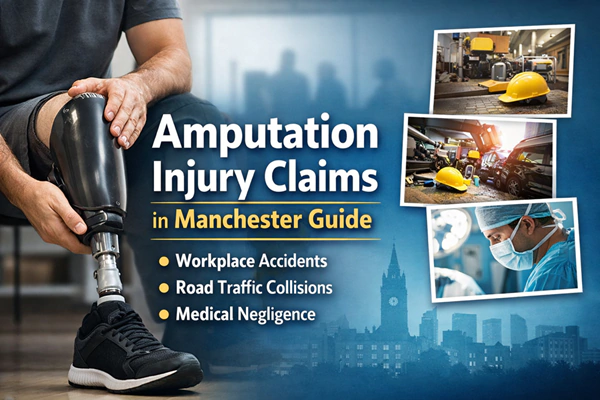
Losing a limb is not just a medical event. It is a sudden and permanent change to how a person lives, works, moves, and remains independent. Amputation injuries affect every part of daily life, from mobility and employment to housing, transport, and long-term health. In Manchester, these injuries most often arise from serious accidents at work, transport incidents, or avoidable clinical failings.
For many people, the immediate focus is survival and recovery. Legal questions tend to come later, once the reality of long-term adjustment becomes clear. Understanding when an amputation injury may give rise to a compensation claim is an important step in securing the support needed to rebuild independence.
How amputation injuries occur in Manchester
Amputation injuries are usually associated with high-impact or high-risk environments rather than minor accidents. In Greater Manchester, common causes include industrial incidents, transport-related trauma, and medical errors.
Workplace accidents are a significant contributor, particularly in factories, warehouses, construction sites, and logistics hubs. Machinery entanglement, crushing injuries, and failures in safety systems can result in traumatic limb loss. These incidents frequently involve equipment that should have been subject to strict safety procedures for guarding, maintenance, or operation.
Serious road traffic collisions are another leading cause. Motorcyclists, cyclists, and pedestrians are particularly vulnerable, but high-speed vehicle collisions can also result in catastrophic limb injuries for drivers and passengers. In some cases, amputation occurs at the scene. In others, it becomes medically necessary later due to severe tissue damage or infection.
Amputation can also arise from clinical failings. Delayed diagnosis, surgical errors, poor post-operative care, or untreated infections may lead to avoidable limb loss. These cases are especially complex, as the injury may develop over time rather than as a single traumatic event.
Immediate impact versus long-term consequences
The effects of an amputation injury change over time. The challenges faced in the first few months are often very different from those that emerge later.
In the immediate aftermath, individuals may face pain, trauma, repeated surgeries, and extended hospital stays. Physical recovery is usually combined with psychological shock and grief, particularly where the injury was sudden and unexpected.
As recovery progresses, new challenges arise. Learning to use prosthetics, adapting movement, and rebuilding basic routines can take months or years. Not all amputees are suitable candidates for prosthetic limbs, and even where prosthetics are used, they often require regular adjustment and replacement.
Long-term consequences can include reduced stamina, secondary health issues, chronic pain in the remaining limb, and increased reliance on support. Employment may no longer be possible in previous roles, particularly where the work involved physical labour, driving, or manual dexterity.
Independence, mobility, and daily living
One of the defining features of amputation injuries is their impact on independence. Everyday tasks that were once automatic may now require planning, assistance, or specialised equipment.
Mobility is often the most visible challenge, but independence extends far beyond walking. This can affect tasks like bathing, cooking, driving, and accessing public spaces. Homes may need modification, including ramps, widened doorways, adapted bathrooms, or stair solutions.
Transport is another common issue; some individuals can no longer drive without vehicle adaptations, while others may need to rely on alternative transport arrangements altogether. These changes can affect social life, family responsibilities, and mental wellbeing.
For many people, independence is not about returning to how life was before, but about achieving stability and control in a new reality.
Prosthetics, retraining, and rebuilding a career
In amputation injury claims, compensation extends beyond the initial injury. It is intended to support long-term independence and adjustment.
Prosthetic limbs are a major consideration as they are not a one-time cost. Prosthetics require on-going maintenance, upgrades, and replacement as technology improves or as the body changes over time. Some individuals may need multiple prosthetics for different activities.
Retraining is often necessary where previous employment is no longer possible. This may involve formal education, vocational training, or workplace adaptation. Even where a return to work is achievable, it may be in a different capacity or with reduced hours.
Support may also be required for on-going therapy, counselling, and assistance with daily living. These needs are often lifelong and must be carefully planned for.
When an amputation injury becomes legally actionable
Not every amputation injury results in a valid compensation claim. For a claim to succeed, it must usually be shown that the injury was caused by a breach of duty.
In workplace cases, the obligation may involve failures in risk assessment, training, equipment maintenance, or safety procedures. Employers have a duty to protect workers from foreseeable harm, particularly in high-risk environments.
In road traffic cases, liability may arise where another party failed to drive safely, follow traffic laws, or account for vulnerable road users. Evidence such as accident reports, witness statements, and expert reconstruction can be critical.
In clinical cases, the question is whether the amputation was avoidable. Delays in treatment, misdiagnosis, or errors in care can all be relevant. These claims require detailed medical evidence and expert opinion.
Why early legal advice matters in amputation cases
Amputation injury claims are complex and evidence-heavy. Early legal advice can make a significant difference, not only to the outcome of a claim but also to access to support during recovery.
Timely advice can help preserve evidence, identify responsible parties, and ensure that rehabilitation and interim support are properly considered. Early funding for rehabilitation can play a crucial role in maximising long-term independence in serious injury cases.
Legal guidance also helps individuals understand their options without pressure. Focusing on recovery often causes people to delay seeking advice, but early clarity can offer reassurance and structure during an uncertain time.
Speaking to a Manchester solicitor about amputation injuries
An amputation injury changes life permanently. Legal advice cannot undo that change, but it can help secure the resources needed to adapt, rebuild, and move forward.
Speaking to a solicitor experienced in serious injury claims allows individuals to understand whether their injury may be legally actionable and what support may be available. For those affected in Manchester, local knowledge of workplaces, healthcare systems, and accident environments can also play an important role.